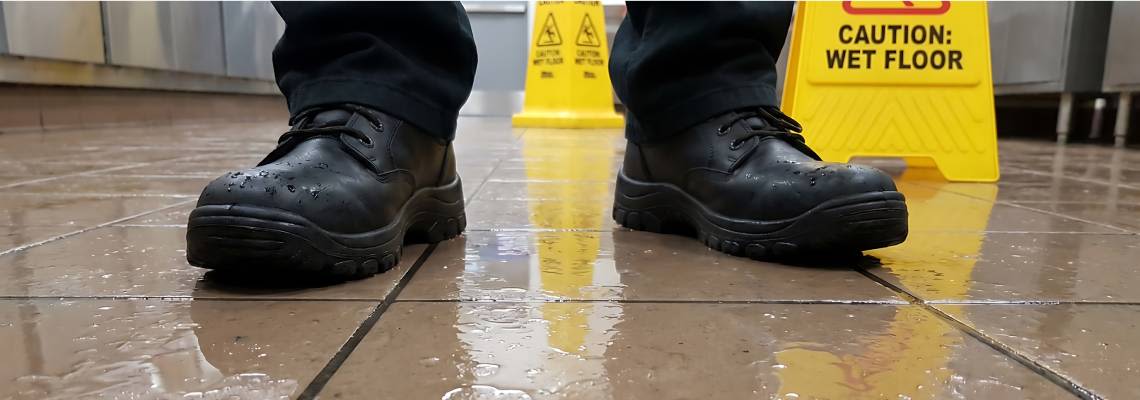
In premises liability cases, experts use slip-resistance testing to measure how slippery a floor was when you fell. They run a device called a tribometer across the surface, often recreating the wet or dry conditions of your accident, and calculate its coefficient of friction (the amount of grip between a shoe and the floor).
If the results fall below accepted safety standards, you will typically have strong evidence to show that the property owner allowed a dangerous condition. A fall on a slick floor can leave you with broken bones, a head injury, or a back injury that keeps you off work for months. It's more frustrating when an insurance adjuster suggests the fall was your fault. Tribometer evidence can counter allegations that your shoes caused the fall.
At The Law Office of Steve Slough in Clayton, Missouri, we investigate slip-and-fall claims, work with qualified experts, and fight for the compensation you need. While the testing standards are national, Missouri law decides how those results are used in your claim, and we can explain what that means for your case. Call us now to schedule a free consultation.
Experts Will Review What Happened
Before testing the floor, an expert must understand what caused your fall. Your attorney may hire a forensic engineer or safety consultant to review photos, surveillance video, witness statements, incident reports, and cleaning records. The expert may also ask what you noticed on the floor and what shoes you were wearing.
This review helps determine whether slip-resistance testing could support your slip-and-fall case. Testing may be important when the flooring itself becomes dangerously slick when wet. If you slipped on a spill that employees failed to clean up, however, surveillance footage and cleaning records may provide stronger evidence.
Our firm can help you investigate what caused your fall and determine which evidence may help prove your claim. We can also work with qualified experts when technical testing or analysis is needed.
Experts Will Inspect and Test the Floor
Experts inspect where you fell to identify the flooring and finish and look at factors such as the slope, lighting, mats, and transitions between surfaces.
Before testing, they will check the tribometer against a reference surface to confirm that it works properly. They will then take several readings in different spots and directions, both dry and wet. When possible, they will use the substance involved in your fall, such as water, grease, or floor cleaner, and photograph and document each step so they can explain how they reached their conclusions if the defense challenges the results.
The floor's condition can change quickly if the owner cleans, waxes, refinishes, or replaces it. Your attorney may send a preservation letter formally notifying the owner to preserve the floor, surveillance video, and relevant records. If the floor has already changed, the expert may test a similar area or a sample of the same flooring.
Experts Will Examine Your Footwear
An insurer may argue that your shoes contributed to your fall, especially if they had worn tread, smooth soles, or high heels. If a jury agrees that your footwear contributed to the accident, it could reduce the compensation you receive.
An expert can examine the shoes you wore for tread, wear, heel condition, and sole material. Floor testing can provide additional evidence because standard tests use a consistent test surface rather than your specific shoes.
If your shoes were in reasonable condition but the floor still tested below an applicable safety benchmark, that finding may strengthen the argument that the floor contributed to your fall. Keep the shoes you wore when you fell. Do not wear, clean, repair, or throw them away because their condition may become important evidence.
Experts Will Compare the Results to Safety Standards
Test results need a benchmark to have meaning. The Occupational Safety and Health Administration (OSHA) does not require a specific friction value for floors, and federal accessibility standards require slip-resistant surfaces without setting a specific number. Experts may instead use recognized industry standards, such as ANSI A326.3.
For certain level indoor floors expected to be walked on when wet, the standard uses a wet Dynamic Coefficient of Friction (DCOF) value of 0.42 or greater. The DCOF measures how much resistance a surface provides against slipping while a person is moving. A higher value generally indicates greater slip resistance under the specific test conditions.
An expert may also review the flooring manufacturer's instructions and warnings about using certain materials in wet areas. Results that fall below an applicable benchmark or conflict with manufacturer guidance may provide evidence that the floor presented an unreasonable slipping hazard.
However, a 0.42 reading does not automatically mean a floor is safe in every situation. An expert may also consider lighting, slopes, missing mats, cleaning practices, and any failure to warn, such as the absence of a wet-floor sign.
Experts Will Testify and Face the Defense's Expert
Experts will put their findings in a written report and may answer questions at trial or in a deposition. The property owner may hire its own expert to challenge the testing, methods, or conclusions.
Before the jury hears expert testimony, a Missouri judge will decide whether the expert is qualified and whether the testimony is based on sufficient facts and reliable methods. The judge will not decide which expert is right. Once the testimony is admitted, the jury will generally decide how much weight to give each expert's opinion.
When submitting a premises liability claim, you generally must show that a dangerous condition existed, the property owner knew or should have known about it, and the owner failed to correct the danger or warn you. Expert testimony can help connect the testing results to these issues.
Contact Our Missouri Slip-and-Fall Attorney for Tailored Guidance
Slip-resistance testing can turn questions about a dangerous floor into measurable evidence. Because floors can be cleaned, refinished, repaired, or replaced, investigating promptly can help preserve the condition of the property and other evidence that may support your claim.
At The Law Office of Steve Slough, our attorney, Steve Slough, handles slip-and-fall and other personal injury cases, using his firsthand knowledge of how insurers investigate claims, challenge expert evidence, and try to place fault on injured people. We use that experience to anticipate those arguments and build evidence to address them.
Located in Clayton, Missouri, we represent clients throughout St. Louis, St. Louis County, and St. Charles County, as well as Madison County and St. Clair County, Illinois. Contact us today to schedule a free consultation.